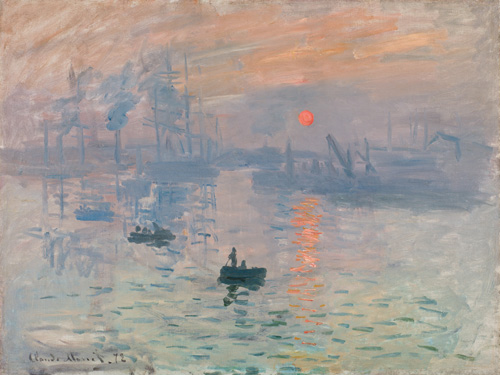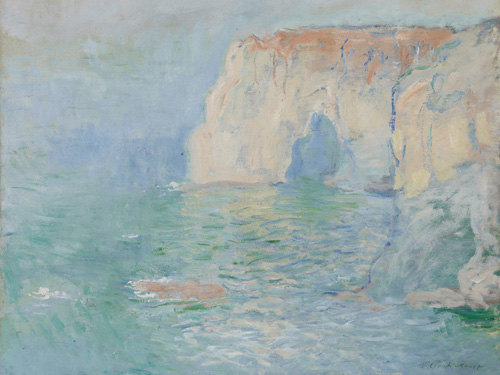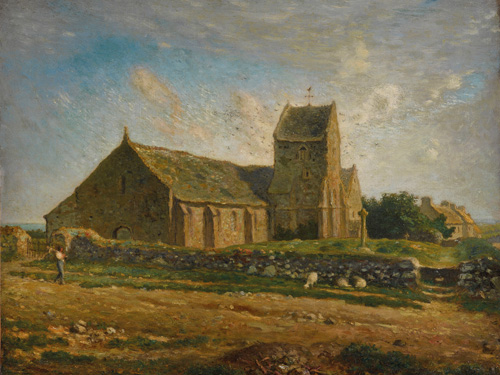
Leading you from Paris to Vernon, this Impressionist getaway encourages you to travel in Monet’s footsteps at a pace with which he would have felt comfortable! Across four days, visit three homes where the great artist lived (at Argenteuil, Vétheuil and Giverny), alternating between walking along the GR®2 national hiking trail and taking low-carbon train journeys. Leading you from the Paris Region into Normandy, this itinerary also includes stops at two museums containing works by Monet.
Day 1: Paris, Argenteuil and Vétheuil
Train + 14km hike
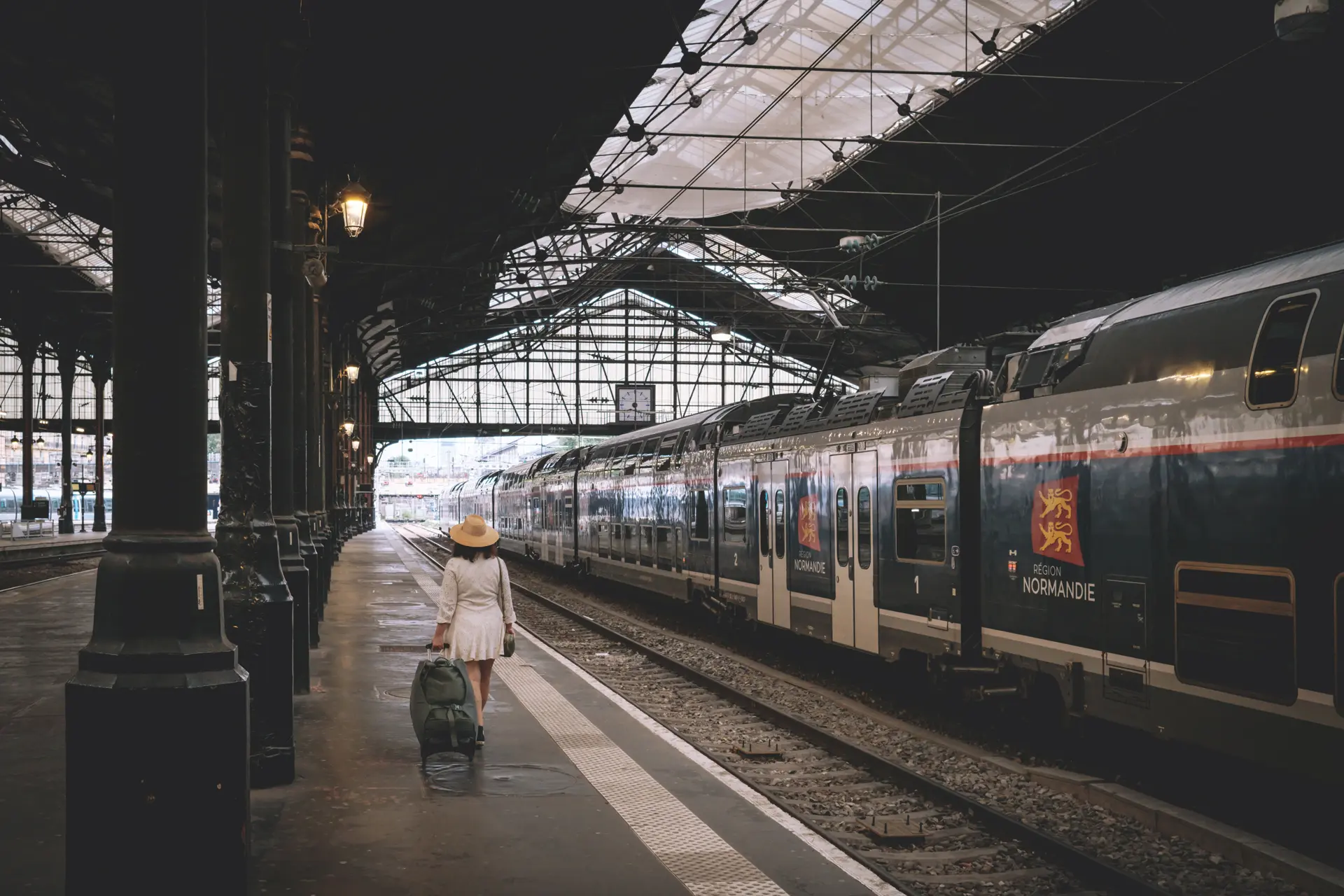
A much-loved station for Impressionists heading off to paint outdoors, the Gare Saint-Lazare itself immediately immerses you in Monet’s period, as the great artist captured it for posterity in a series of paintings he made of it in 1877. Monet was born in Paris, then grew up in the Normandy port of Le Havre. Throughout his life, he made use of the new railway line linking the French capital to the Normandy coast. So, it’s only fitting that this itinerary should begin at this station. Taking a Transilien train on Line J, enjoy the varied landscapes on the way to the first stop on this trip, Argenteuil.
This was the first place where Monet set up home with his own family, from 1871. A few years later, in 1874, they moved to the famed ‘pink house with green shutters’ here, now the Maison impressionniste Argenteuil. Turned into a museum, it immerses visitors in the artist’s prolific production of works during his years here. He would paint over 250 canvases, including scenes of regattas and views from bridges over the Seine, as well as his iconic series of Coquelicots (Poppies).
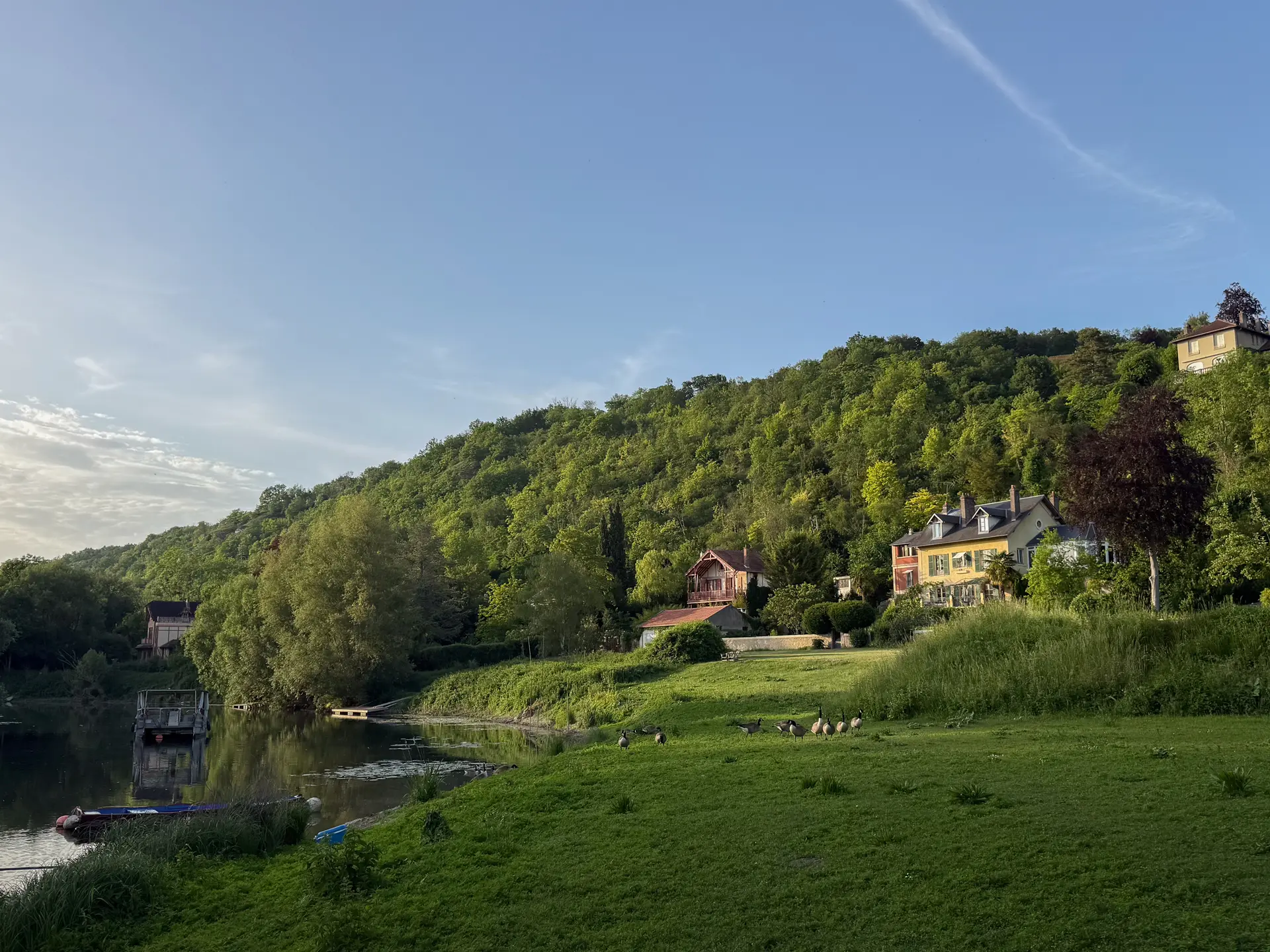
After Argenteuil, a further hour-long train journey on Line J of the Transilien network enables you to reach Mantes-la-Jolie (use the stop Mantes-Station) to reach the start of a hike following in Monet’s footsteps, walking along the national GR®2 hiking trail from Mantes-la-Jolie to Giverny. Below the station, your next stage, 14km in length, starts by taking you through a maze of medieval lanes before you cross the Seine to head to the village of Vétheuil along the Seine’s slopes. This bucolic trail helps you appreciate the light effects that Monet so relished rendering in his Impressionist manner.
Day 2: from Vétheuil to La Roche-Guyon
7km hike
It was in the pretty village of Vétheuil that Monet settled with his family between 1878 and 1881. Since 2026, the Vétheuil home where Monet lived has been open to the public. It may be modest, but it is cosy and light. However, it is associated with one of the most painful periods of his life, marked not just by financial difficulties, but also by the death of his wife, Camille Doncieux. Grief-stricken, the painter perhaps expressed his desolation in La Débâcle, ou Les Glaçons (The Break-up of the Ice), a work of 1880, executed during what proved, paradoxically, an extremely productive period of painting for him.
Today, appreciate Vétheuil’s serene atmosphere on a walk taking in the church, often painted by the artist, and the grave of his wife Camille, who also served as his model in numerous significant works, including La Femme à l’ombrelle (Woman with a Parasol). In the village and along the banks of the Seine, a marked trail featuring reproductions allows you to compare certain of Monet’s canvases painted here with the landscapes that inspired him and that have remained practically unchanged to this day.
On Fridays, weekends and public holidays from April to November, you can cross the Seine to Lavacourt on a little ferry, or bac. From the river’s south bank, contemplate the views over to the village that Monet painted on numerous occasions.
Returning to Vétheuil, continue hiking along the GR®2 to La Roche-Guyon, a member of the exclusive association, Les Plus Beaux Villages de France. Here too, a walking trail dotted with panels reproducing Impressionist canvases incites you to observe landscapes in the very spots Monet chose to paint in his day.
Day 3: from La Roche-Guyon to Giverny
10km hike
This third day begins with some 10km of hiking through the verdant Vexin area on the border with Normandy, which you cross into, entering the county of Eure. The rustic, hilly terrain and banks of the Seine recall certain series of paintings executed by Monet.
In the very village of Giverny, where the master of Impressionism lived from 1883 to 1926, Monet painted his series of Meules (Haystacks) on the very spot where the Musée des impressionnismes Giverny now stands. As a little homage to this famed series, at harvest-time, a haystack prettifies the meadow beside the museum.
Continue with a tour inside the museum, which displays, among other works, one of the canvases from Monet’s Nymphéas (Water Lilies) series. Every year, several temporary exhibitions held here encourage visitors to explore the impact of the Impressionist movement on subsequent generations of artists, right up to the present day.
Day 4: from Giverny to Vernon
6.5km hike
Do go for a walk on the edge of Giverny, on the Plaine des Ajoux, covered in poplars, trees to which Monet devoted another famed series of works. Then call in at the former hôtel Baudy, for so long a magnet for artists, and at Monet’s grave, before dedicating time to visiting the Maison et Jardins de Claude Monet in Giverny, exploring where the artist lived and found the greatest inspiration during over 40 years spent here.
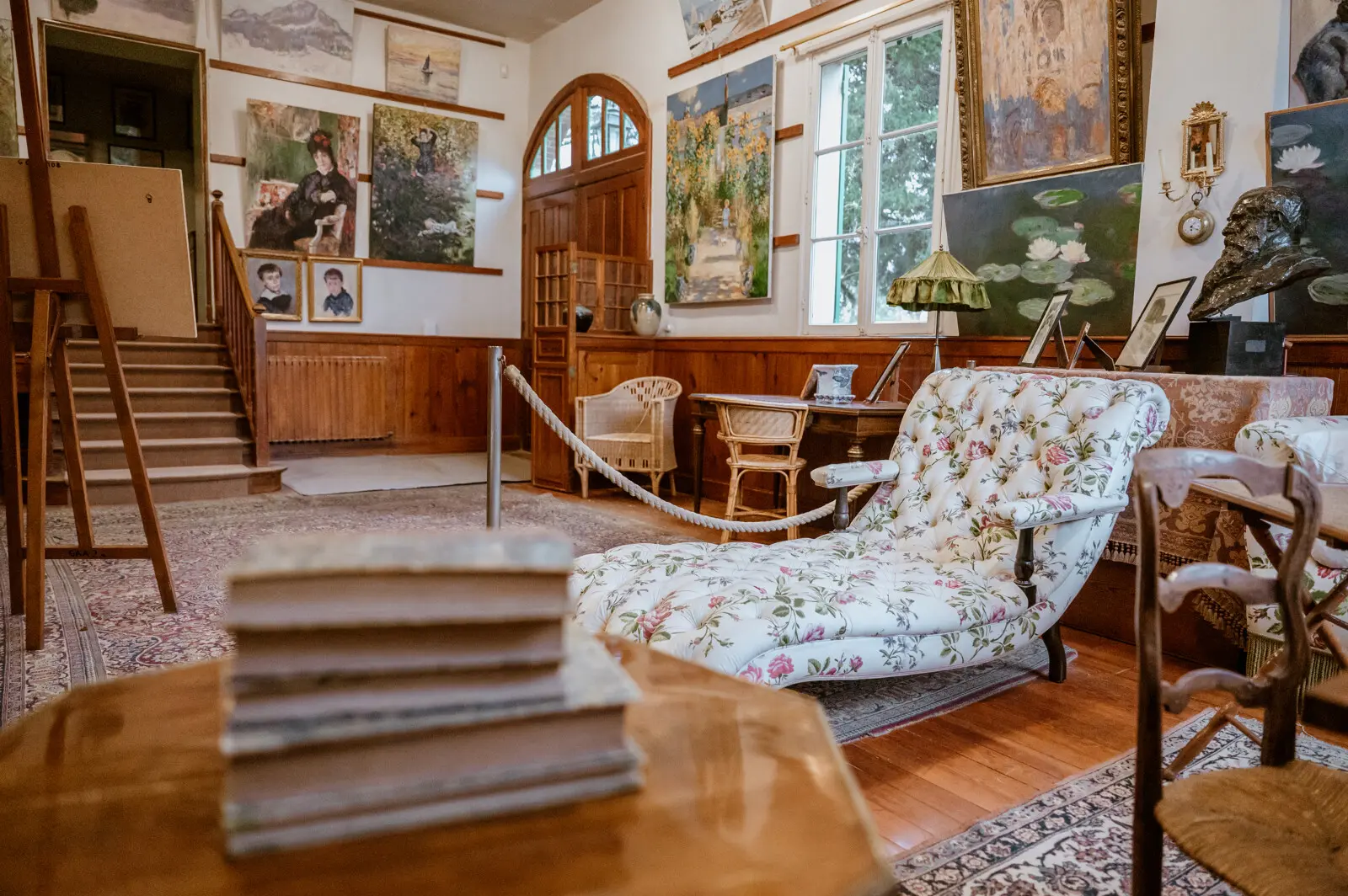
The interiors, renovated to look as they did in Monet’s day, show what a talented interior designer the great artist was! A walk around the gardens, replenished according to the season and following the artist’s own plans, provides a splendid final flourish on your Giverny tour as you take in two iconic themes Monet repeatedly painted: the water lily pond and its Japanese bridge.
A one-hour walk westwards along the GR®2 national hiking trail brings you to Seine-side Vernon. This town is marked by the ever-changing light on the river, particularly beautiful to observe beside the highly picturesque Vieux-Moulin, an historic watermill. In town, the Musée Blanche Hoschedé-Monet is the last stop on your trip. This pretty little museum displays works by Blanche, daughter of Monet’s second wife, who first served as a model for the artist before becoming an artist in her own right. The museum is also home to a rare Nymphéas (Water Lilies) circular canvas, or tondo, signed by her famed step-father and father-in-law!
Finally, it’s just a 10-minute walk to Vernon station, from where a NOMAD train taking you back to Paris in around 50 minutes, leaving you time to reflect on your gentle, low-carbon trip in Monet’s footsteps.