By Félicie Faizand de Maupeou, art history researcher, project leader on the program for research into Impressionism, Université Paris Nanterre.
What are we celebrating in 2026?
On 5 December 1926, Claude Monet breathed his last in his bedroom in Giverny. By his side, Georges Clemenceau, a friend of long standing, is said to have removed the light, flower-patterned curtains, using them to replace the traditional black sheet placed over a coffin, declaring: “No black for Monet, black isn’t a color.” This anecdote, relaid by the great actor and wit Sacha Guitry, may be fictional, but it reflects the closeness of the two men, their friendship so very important at the end of the artist’s life. It also confirms the view we’ve kept of Monet, as a great painter of color and light.
These centenary celebrations may first bring to mind Monet in his final stages, “an old man crazy about painting” living a reclusive life on his property in Giverny, whose gardens he’s been painting tirelessly for over 40 years. But by celebrating this anniversary, we are in reality taking the opportunity to celebrate Monet’s entire artistic life. And for Monet, his life and his art were inextricably linked to a geography in which his personal and artistic lives were fused together.


An apprenticeship in observation: from Le Havre to Paris
Born in Paris in 1840, but brought up in Le Havre, Monet’s artistic talent emerged very early, and he was encouraged by Eugène Boudin, renowned for depicting the region’s skies. Boudin directed Monet towards landscape painting executed from life. Leaving the Normandy of his youth, Monet launched himself on his artistic career in the 1860s by heading to Paris, then world capital of art. He met other young artists there, such as Bazille, Renoir, Sisley, Pissarro and Cézanne. Sharing the same spirit and strong desire to depict the world as it really was, they headed out of doors to capture the natural light as well as the modernity of a society in the midst of major transformations. Nevertheless, the established art world was stuck in its ways, making it hard for them to get tastes to change. For Monet, the early stages of his career were not easy.

Difficult beginnings
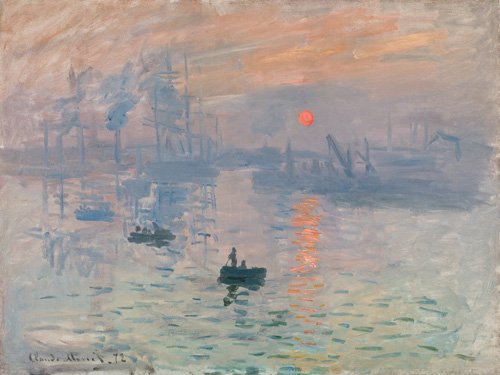
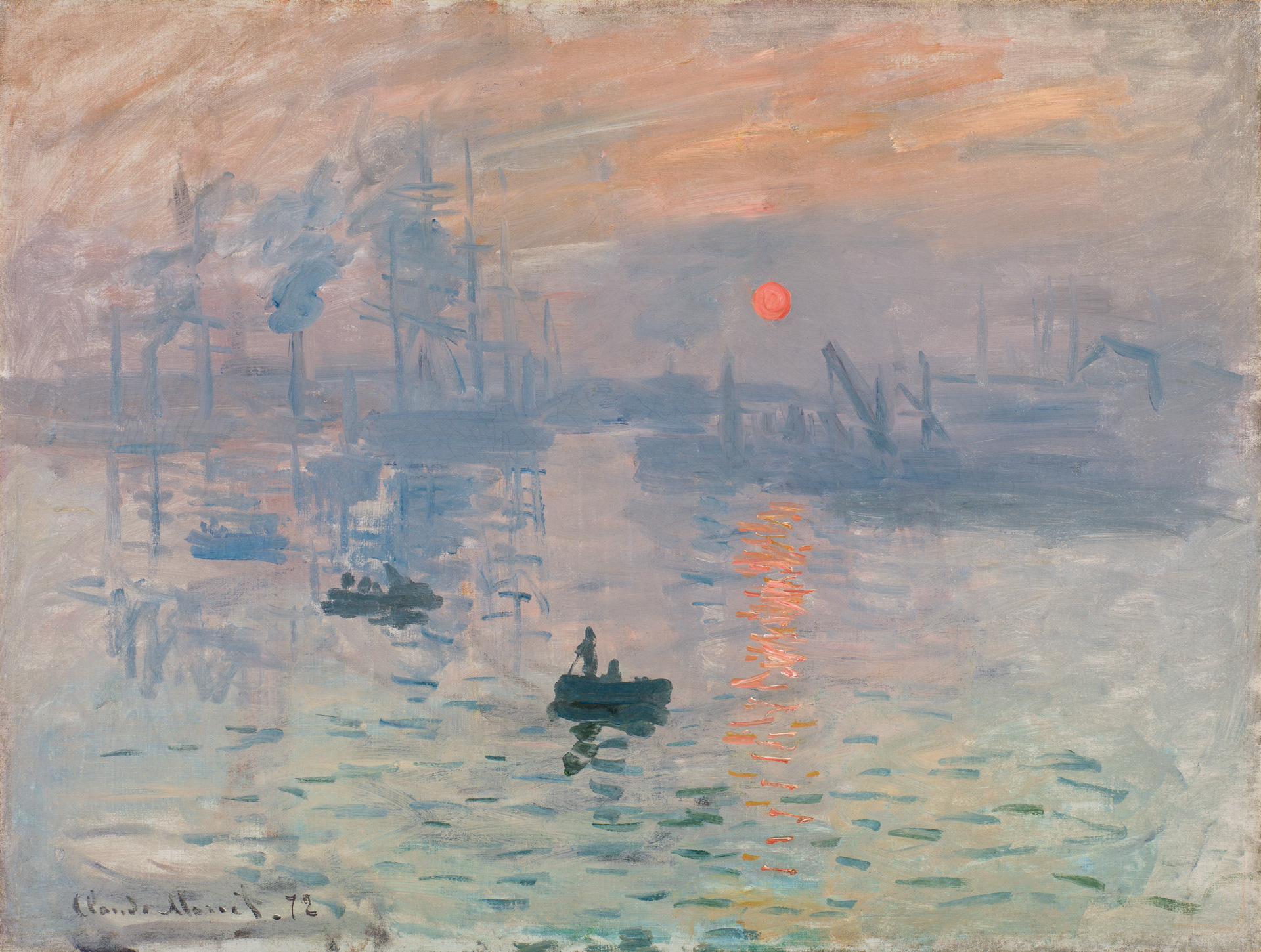
While Monet did have pieces accepted early on for display at the Salon de peinture, the only place to officially show canvases, his growing aesthetic audacity soon caused the jury to reject him and his further works. Forced to find new ways to reach a wider public, along with his early friends, joined also by Degas, Caillebotte, Morisot and then Cassatt, he was pivotal in setting up group exhibitions. So, Monet would take part in five out of the eight Impressionist exhibitions. It was due to his canvas, Impression soleil levant (Impression, Sunrise), exhibited at the first edition, in 1874, that the term Impressionism was coined, but first as a scornful criticism, before it was positively adopted, giving its name to a whole artistic movement.
However, even these initiatives could not provide Monet with the recognition he was seeking and his living conditions remained extremely precarious. The artist was forced to change home regularly, to escape his creditors. At first living in Paris, he next spent some time in Sèvres, followed by Bonnières-sur-Seine and the hamlet of Saint-Michel in Bougival, and then lived for longer periods in Argenteuil, followed by Vétheuil. It was at the last that his wife, Camille Doncieux, whom he had met in 1866, when she served as one of his models, and who went on to give him two sons, Jean (born in 1867) and Michel (born in 1878), died at the age of 32. Monet, after a short spell in Poissy, settled in Giverny in 1883. He would stay there up until his death.

Making a name for himself
Although Monet would move progressively further away from Paris, the capital remained a place of inspiration for his painting, as well as the place to build up his career, the place to exhibit, the city where you could meet the movers and shakers in an art world that was so rapidly changing, where the traditional institutions were being gradually replaced by new players, including dealers, critics and collectors.
Monet, who was particularly well attuned to the developments of the period, made the most of these transformations, building his networks. He was supported by the art dealer Durand-Ruel, whom he had met while in exile in London in 1870, and managed to attract a number of private collectors as well as getting certain critics on board.
From 1880 onwards, having benefited from the Impressionist group’s dynamism, and while still continuing to keep up his links with his artistic friends throughout his lifetime, Monet developed a more individualistic strategy for exhibiting and selling his works. Even if things remained difficult for him for a few more years, his circle of admirers grew, along with his success.
Seeking out themes across the Paris Region and Normandy
Monet may have built his career in Paris, but he found inspiration more widely, across the Paris Region, along the Seine Valley, and around Normandy.
The cradle of Monet’s artistic calling, the Normandy coasts and countryside drew him back time and again, as he depicted them under the ever-shifting skies so characteristic of the region. He would explore the whole Normandy coastline, but the Seine Estuary was his main focus early on in his career, when he often painted the middle-classes holidaying in some of the very first French seaside resorts, of Sainte-Adresse and Trouville.
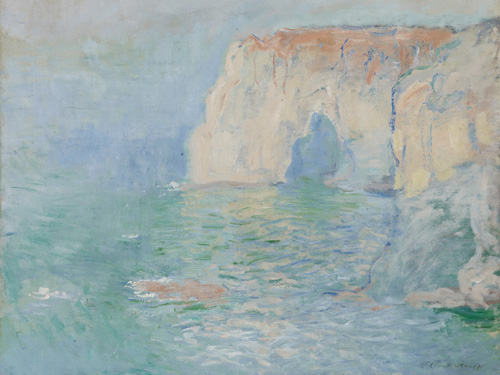
In search of more unspoilt landscapes, Monet then followed the Normandy coast right up to the port of Dieppe, with stops at the cliffs of Fécamp, Pourville and Étretat. While he would spend some important interludes in other French regions and in certain foreign countries, his main source of inspiration remained all along the Seine Valley.

An open-air studio
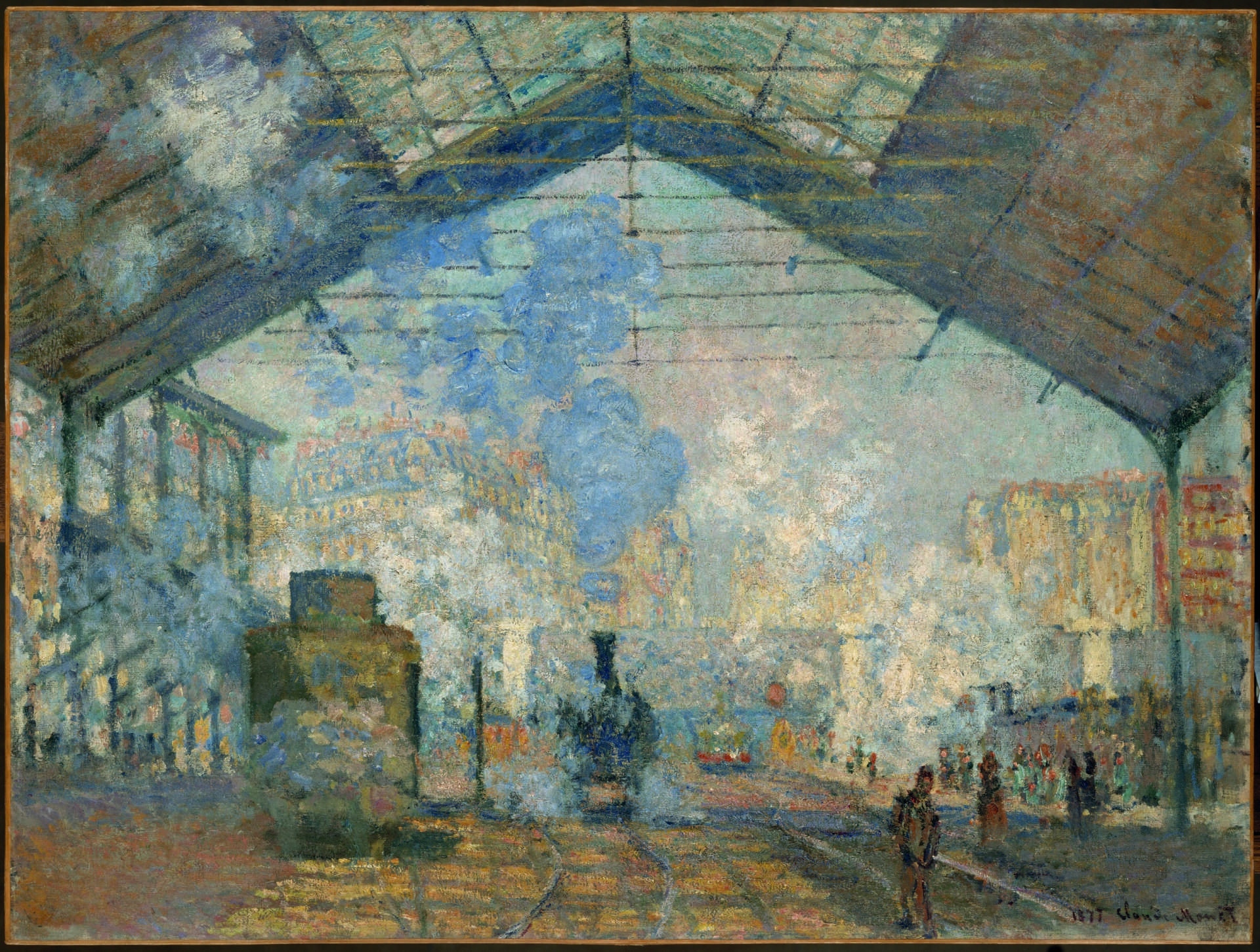
Monet alternated painting campaigns in Normandy lasting several weeks with exploring Paris, where the Gare Saint-Lazare railway station symbolized the modernity of the city. He also discovered the wider Paris Region, traveling around from his series of homes. He would wander around the surrounding countryside of each, setting up his easel in fields or on the banks of the Seine, in every season, at any hour of the day. The places where he lived became his prime open-air studios.
In the landscapes he chose to depict around Argenteuil, he was intent on recording both nature and the signs of modernity transforming it, such as bridges, trains and boating activities. Before he settled in Giverny, he made his garden in Vétheuil into a favorite theme and found a reflection of his suffering at the loss of his wife in the canvas Débâcle (The Break-up of the Ice), showing the Seine sweeping great big blocks of ice downstream in the harsh winter of 1880.


Painting in series
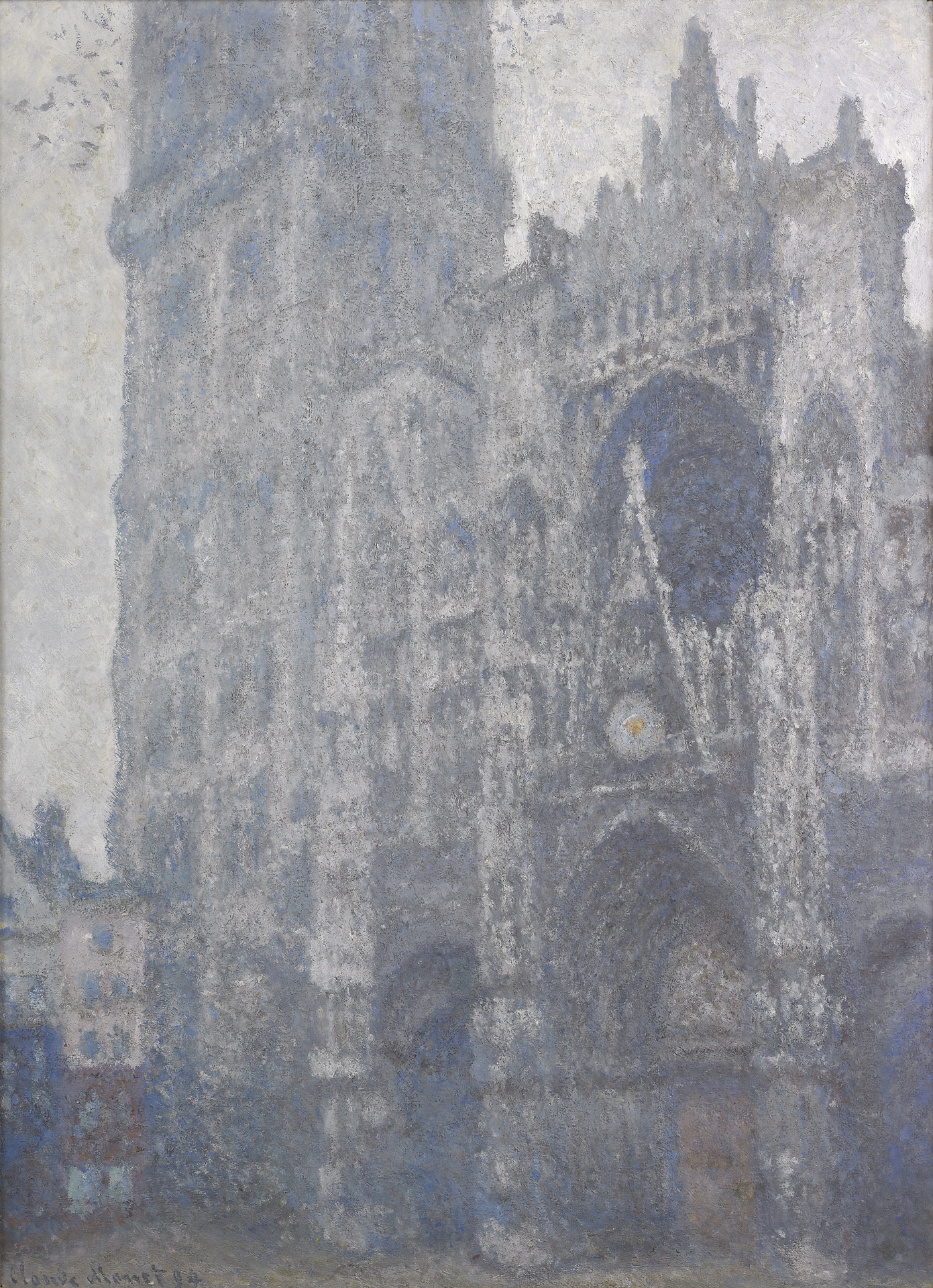
It was around his home in Giverny that Monet perfected his technique of seriality, where he depicted the same theme many times in a row, using the same angle and framing each time. It wasn’t so much that he wanted to paint Meules (Haystacks) or Peupliers (Poplars) repeatedly, but that he wanted to capture the fleeting light that endlessly transfigured his themes. From the 1890s onwards, he would paint almost exclusively in this manner, for example depicting the façade of Rouen Cathedral over 30 times.

Working alone, but living surrounded by others
In his youth, Monet may sometimes have painted alongside friends, for example with Bazille in Fontainebleau Forest or Renoir on the banks of the Seine at the restaurant la Grenouillère, but before long he realized that he preferred working alone. In contrast to the solitude he appreciated for painting, he loved the warmth of his large, blended family and his vibrant social life. After the death of his first wife, Monet would settle down with Alice Hoschedé, who had six children by her first marriage, to Ernest Hoschédé, a patron of the great artist. Alice and Claude, as a couple, filled their home in Giverny with life, their friends very often invited to share a hearty meal with them and to admire the gardens that Monet cared for so passionately.
From gardens to museum – a total work of art
No sooner had he moved in at Giverny than Monet organized major works to transform the gardens, having the pond enlarged, planting water lilies and connecting the gardens to the property. He designed and set up the gardens in the manner of his canvases, and would make them the main theme of his future paintings. For over 40 years, he would tirelessly depict the pond in his Nymphéas (Water Lilies), his most extensive series, amounting to over 250 canvases on the subject, including vast panels.
Begun in the hidden sanctuary of his studio, made without a specific destination in mind, they would find their rightful place at the end of the First World War. Immediately after the armistice between France and Germany had been signed, Monet wrote to Clemenceau, offering two of the panels to the French nation. This donation grew to form the grand ensemble of decorative panels, known as the Grandes Décorations, on display in Paris’s musée de l’Orangerie. Monet spent the last years of his life perfecting this magisterial ensemble, even going as far as designing how the panels should be hung, in a unique, dramatic display that placed the viewer at the heart of this watery spectacle.